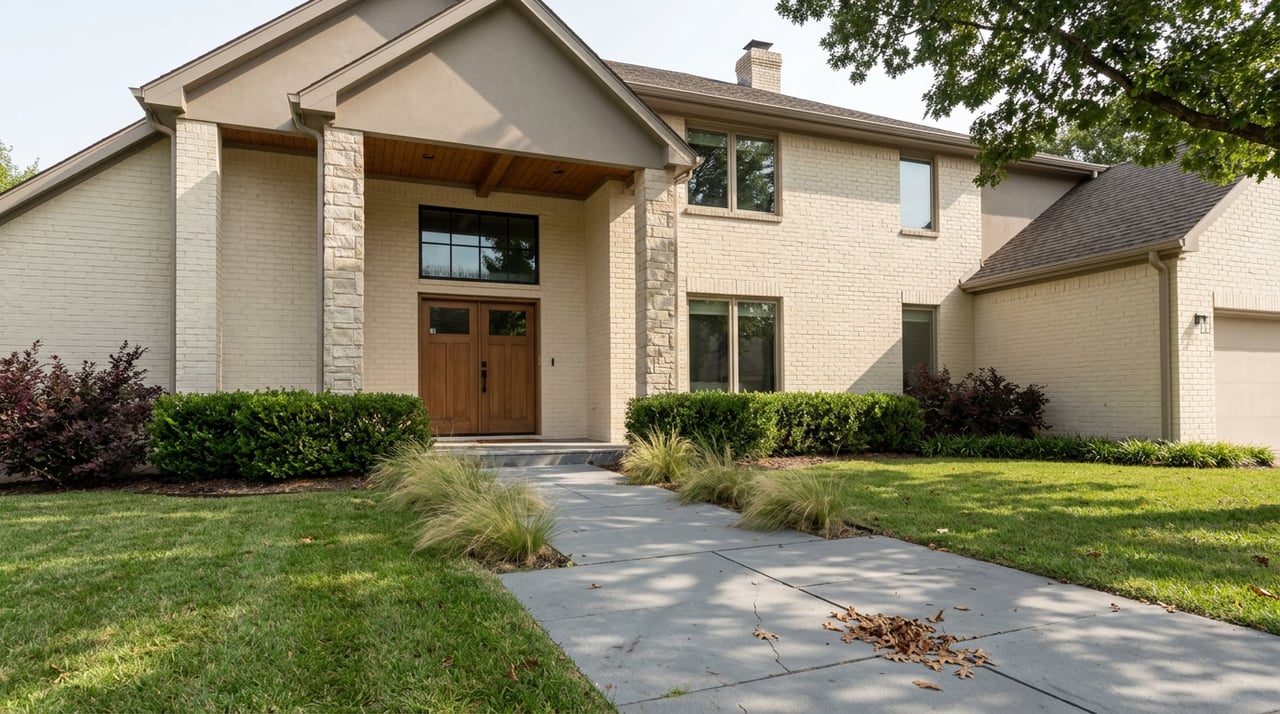
If you are comparing Frisco to Prosper or Celina for a corporate move this year, you have probably run into two facts that do not sit well together. The first is that Frisco is absorbing more corporate relocations and office leasing than almost any other suburb in the region. The second is that the median resale price in Frisco actually fell over the past year. How does the busiest office market in North Texas produce a housing market where sellers are cutting prices?
The short answer is that Frisco's job market and its resale housing market are running on two different clocks right now, and the gap between them tells you more about how to time a purchase here than either number does on its own.
The Office Side of the Story
Start with what is actually happening at street level. Public Storage relocated its corporate headquarters into 122,500 square feet at HALL Park in 2026, a lease large enough that it ranked among the top 20 signed anywhere in the Dallas-Fort Worth market this year. HALL Park's owner broke ground on The Terraces at HALL Park, a 10-story, 200,000-plus-square-foot office tower, in mid-2026, with delivery targeted for 2028 and a $14 million expansion of the adjacent Kaleidoscope Park bundled into the project. HALL Group's founder, Craig Hall, described the push this way: "The workplace is evolving, and we're responding with a product designed for tomorrow's employees."
The Frisco Economic Development Corporation's 2025 year-end results back up the street-level view. The city's own report credited 14 corporate office relocations and expansions with more than 650,000 square feet of leased space and over $125 million in expected tenant investment, on top of another 500,000-plus square feet of commercial space already in the pipeline. The same report put the city's private capital investment above $1.5 billion for the year and its new office construction pipeline above 1.8 million square feet.
Zoom out to the regional picture and Frisco's advantage gets sharper. Class A office vacancy in Frisco runs about six percentage points below the Dallas-Fort Worth regional average of roughly 24 percent, as of August 2026. D Magazine reported that leasing volume across the metro climbed nearly 13 percent in the first half of 2026 compared to the same period a year earlier, an increase of more than 900,000 square feet. A separate Q1 2026 report from Partners Real Estate found that even as overall metro vacancy sat at 25.4 percent and net absorption went negative for the quarter, Class A rental rates hit a record $37.47 per square foot, which is what a flight to quality looks like on paper: fewer buildings absorbing more of the demand.
None of this reads like a market that should be producing falling home prices.
The Home Price Data Doesn't Match
But it is. Over the three months ending June 2026, the median sale price of a home in Frisco was $675,000, down 2.1 percent from the same period the year before. The median price per square foot came in at $231, down slightly year over year as well. Homes are taking an average of 42 days to sell over that same three-month window, and Realtor.com classified Frisco as a buyer's market as of March 2026.
Here is the detail that rules out a simple demand story: sales volume actually rose. Frisco logged 724 home sales in June 2026, up from 650 in June 2025. More homes changed hands at lower median prices. That combination points to a supply story, not buyers losing interest.
Where the Two Stories Split
The mechanism is a mismatch between two different housing pipelines that happen to be landing in the same market at the same time.
Across Dallas-Fort Worth, roughly 40 percent of existing homeowners are sitting on mortgage rates below 4 percent, according to a regional housing analysis published earlier this year. Those owners have little financial reason to sell and trade into a rate closer to 6 percent, so resale listings in the segment they occupy stay scarcer than population growth alone would predict.
New construction does not have that problem. Builders are not comparing today's rate to a locked-in rate from 2021, they are comparing a sale today to a sale next quarter, so they compete on price and terms instead. Regional data shows that roughly 70 percent of new-home sales now include rate buydowns or other structured incentives that put buyers closer to an effective 5.5 percent rate. One builder industry analysis of the Dallas-Fort Worth market described the divide directly: entry-level and mid-range resale supply remains tight because of rate lock-in, while move-up and upper-tier resale has seen meaningfully more inventory, longer time on market, and more price reduction activity.
That upper-tier, move-up segment is exactly where Frisco's corporate relocation buyers shop. A household relocating for a job at HALL Park or a new headquarters lease is not typically bidding on an entry-level condo. They are the buyer competing directly against a builder offering a subsidized rate and a fresh floor plan, which means the same corporate hiring that is tightening Frisco's office market is landing buyers into the exact price tier where resale sellers are losing pricing power to new construction.
The Building Boom That Was Already Contracted
The new-construction wave hitting the market this year was not built in response to this year's headlines. It was planned years ago on its own delivery schedule.
The Fields, the 2,545-acre master-planned community anchored by the PGA of America headquarters, has Toll Brothers and Landon Homes actively delivering luxury product into a segment of the market that overlaps directly with relocating executives. The Grove Frisco is expanding into new 2026 phases with Brookfield Residential joining as a builder. Southgate Homes is building at The Parks at Wilson Creek starting around $800,000. Phillips Creek Ranch remains one of the most active master-planned communities in the city's northern corridor.
Each of these communities is releasing inventory on a schedule set when contracts were signed, not in response to how many corporate relocations closed this quarter. That is the timing mismatch: builder supply calibrated to a multi-year construction cycle is arriving in the same twelve months that resale sellers are staying on the sidelines, and the two forces are pulling the price data in opposite directions from what the jobs headlines would suggest.
What Happens When the Land Runs Out
There is a second, longer-arc number worth understanding if you are weighing Frisco against a neighbor like Prosper or Celina for anything beyond a one-year horizon.
In its most recent annual financial disclosure, the city noted it is nearing full residential buildout. The city issued 1,084 housing permits in 2025, alongside 22 new multifamily permits and 127 new commercial permits, a mix that already leans toward infill and commercial development rather than new subdivisions on open land. Downtown, the Rail District redevelopment has exceeded $80 million in investment and now includes a public parking garage and plaza. The city approved up to $182 million in Toyota Stadium improvements. Universal Kids Resort, a $550 million project with a planned 300-room hotel, is under construction and slated to open in 2026. The city reported 8 million visitors in 2024 with an estimated $2.6 billion economic impact.
Read together, these numbers describe a city shifting from horizontal growth, more subdivisions pushing outward, to vertical and infill investment concentrated around existing districts. That matters for anyone comparing Frisco's long-term appreciation story to Prosper or Celina, both of which still have significant undeveloped land and are earlier in their own buildout curve. The next decade of value creation in Frisco is more likely to concentrate around redevelopment zones like the Rail District than around new master-planned subdivisions, because there is less open land left to build the subdivisions on.
What This Means If You're Comparing Frisco Right Now
- If you are shopping in the move-up or luxury resale tier, expect real negotiating room. That is precisely the segment where days on market have lengthened and price reductions have become common.
- If you are cross-shopping a resale listing against new construction in the same price range, run the builder's incentive package (rate buydown, closing cost credit, design allowance) against the resale seller's asking price before assuming the sticker prices are comparable.
- If your timeline is longer than a few years, weigh proximity to the Rail District and other infill investment zones differently than you would have five years ago, when the safer bet was simply picking the newest master-planned community.
- If you are relocating for a job tied to HALL Park, the Fields, or another corporate campus, know that a tight office market and a soft resale market can coexist in the same zip code without contradicting each other.
A Few Questions Worth Asking Directly
Does a buyer's market classification mean home values are falling across all of Frisco? No. The softening is concentrated in the move-up and upper-tier resale segment, where new construction competes hardest. Entry-level supply remains tighter because fewer owners in that tier are giving up sub-4 percent mortgages to sell.
Does this pattern also apply to Prosper and Celina? Both are earlier in their own development cycle and have more open land remaining, so the same full-buildout dynamic has not yet arrived there. The mortgage lock-in effect and builder incentive competition are regional, though, and show up in some form across all three markets.
Comparing suburbs on a median price alone misses the mechanism driving that price, and in Frisco's case the mechanism is a temporary supply mismatch layered on top of a permanent shift in how the city grows next. If you want a read on how that shift applies to a specific listing, price point, or relocation timeline, Nancy Floyd can walk through what it means for your situation. Schedule a meeting to start the conversation.
This article is general information, not legal, tax or financial advice. Consult a qualified professional about your situation.